

+918048035182

Currently it only shows your basic business info. Start adding relevant business details such as description, images and products or services to gain your customers attention by using Boost 360 android app / iOS App / web portal.

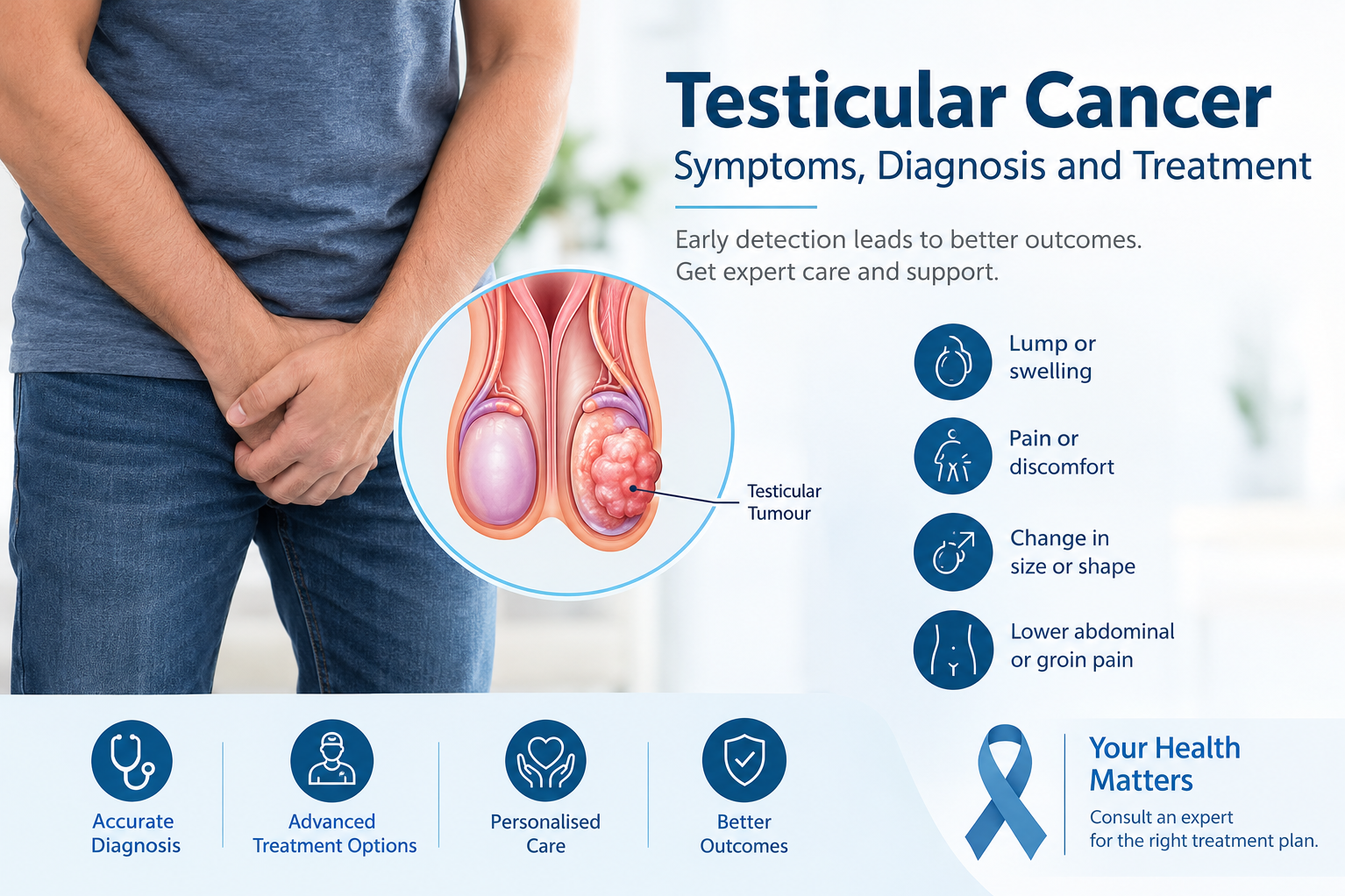
Testicular cancer is a type of cancer that develops when abnormal cells grow uncontrollably in one or both testicles. The testicles are part of the male reproductive system and are responsible for producing sperm and testosterone. Although testicular cancer is relatively uncommon compared with several other cancers, it is frequently diagnosed in younger and middle-aged men. The encouraging news is that testicular cancer is highly treatable and often curable, particularly when detected early. Recognising the warning signs and seeking timely medical evaluation can help patients receive an appropriate diagnosis and treatment plan. Dr. Ashwin Tamhankar provides cancer-related evaluation and treatment guidance tailored to the patient's condition, cancer type and stage. Symptoms of Testicular Cancer The early symptoms of testicular cancer may be painless, which can cause some people to delay seeking medical attention. Any unusual change in the testicles should be evaluated by a qualified medical professional. Common signs and symptoms include: A lump in the testicle: A painless lump or swelling may be the first noticeable sign. Change in testicle size: One testicle may become larger or feel different than usual. Heaviness in the scrotum: A feeling of pressure, fullness or heaviness may develop. Pain or discomfort: Some patients experience aching or pain in the testicle or scrotum. Lower abdominal or groin pain: Discomfort may occur in the lower abdomen or groin area. Fluid accumulation: A sudden collection of fluid around the testicle may occur. Breast tenderness or enlargement: Certain testicular tumours may affect hormone levels. Back pain or respiratory symptoms: In more advanced cases, symptoms may occur if cancer has spread to other parts of the body. These symptoms do not necessarily indicate cancer, as other conditions can cause similar changes. However, prompt medical assessment is important to determine the underlying cause. For Consultation, book an appointment with specialist 08048035182 Uro cancer specialist in Pune | Uro-oncologist in Pune


